In brief
The short answer
As at July 2026, there is generally no broad national purchase subsidy for a home EV charger for private individuals. What may come into play: varying local authority or provincial schemes, and tax advantages if you drive or work commercially (deductions, benefit-in-kind, an employer or lease scheme). The biggest saving usually lies not in a subsidy but in smart charging: a dynamic contract and charging on your own solar power. Always check the current terms.
- For private individuals there is usually no broad national purchase subsidy for a home EV charger.
- Local authorities and provinces sometimes have their own pots, which change and can run out quickly.
- If you drive or work commercially, the advantages often run via deductions, benefit-in-kind or your employer.
- The biggest saving lies in smart charging: a dynamic contract and charging on your own solar power.
- Always check the current terms with an official source before you buy.
Is there a national subsidy for a home EV charger?
Short and honest: as at July 2026, there is generally no broad national scheme subsidising the purchase of a home EV charger for private individuals. National support around electric driving in recent years has been focused mainly on the car itself, and those schemes are limited, change and are sometimes already exhausted. The charger on your own wall mostly falls outside them.
That surprises people, because a home charger feels like a logical extension of electric driving. But the government steers more towards the car and public charging infrastructure than the private charger at home. Anyone who comes across a concrete subsidy amount for a home charger online would do well to look at where it comes from. Often it is about a local scheme, about the car, or about a different year.
Our advice is down-to-earth: work out your purchase without a national subsidy. If something comes along unexpectedly, that is a welcome bonus. But do not base your decision on a national pot that does not exist for the charger itself.
Where you can get something: local and year by year
Where there is little to be had nationally, sometimes there is something locally. Some local authorities and provinces have pots for sustainability or sustainable mobility where in certain years a charging point or part of the installation costs can be covered. Sometimes it is not a grant but a low-interest sustainability loan. In Noord-Brabant these kinds of schemes run via the local authority, the province or an energy advice desk, and they vary by location.
Two things characterise these schemes. They change: what was available last year may be gone this year, and vice versa. And they are often limited: the budget runs out at some point and it is first come, first served. Do not count on them, but do check whether anything is running in your local authority before you buy or place the order.
The quickest route: search on your own local authority's website for sustainability, energy or electric driving, or call the local energy advice desk. You will find out within a few minutes whether something is currently available and on what terms. We can tell you what is technically possible and what it costs; check the current subsidy status at that official source.
Driving or working commercially: the advantages run differently
If you drive or work commercially, the picture changes. For sole traders and self-employed people a home EV charger may fall under business costs, with VAT and depreciation you can process through your accounts. That is not a subsidy, but a tax route, and how it works out exactly depends on your situation and whether you use the car and the charger commercially.
For employees with a company car it runs differently again. The benefit-in-kind comes into play, and often the employer or leasing company installs or pays for the home charger, with an arrangement about the power you charge at home. This is genuinely bespoke per scheme. One employer arranges the charger and the installation in full, another works with an allowance or a fixed monthly amount.
What we pass on to you: if you belong to this group, ask your accountant, employer or leasing company about the exact scheme before you buy or have anything installed yourself. We ensure a safe, correct installation to NEN 1010; the tax or commercial route is decided by you together with whoever advises you on that. Here too, check the current terms.
The real gain: smart charging on your own power
If you look honestly at the numbers, the biggest saving around a home EV charger usually lies not in a subsidy, but in how you charge. A car is a significant user, and the difference between charging at an expensive moment and charging at a cheap moment adds up over the course of a year. There is real money to be made with a smart approach.
Two things make the difference. With a dynamic energy contract you pay the hourly rate at that moment, and a smart charger can automatically charge when power is cheap, often at night or in the middle of the day. And if you have solar panels, you can charge during the day on your own generation instead of feeding it back for a low rate. Especially now that net metering is being phased out, using your own solar power yourself becomes more attractive.
That is therefore not a subsidy, but a change in what you save, and that is largely in your own hands. So choose an EV charger that can handle dynamic tariffs and your solar panels, and look at the running costs over the years, not just the purchase price. That is where the gain lies that you can actually steer.
What to look out for
Where can you find an advantage?
Before you count on a subsidy, it pays to look at where you can really gain something. These points help you lay out the options.
Your own local authority
Check your local authority's website under sustainability, energy or electric driving, or call the energy advice desk. Sometimes there is a scheme or a sustainability loan running.
Provincial schemes
The province or a regional desk sometimes has pots for sustainable mobility. They change by year and are often limited, so check before you buy.
Commercial use and tax
Driving commercially as a sole trader or self-employed? Then the EV charger may fall under your business costs. Ask your accountant how it works out in your case.
Company car
With a lease car, the employer or leasing company often arranges or pays for the home charger. Ask about the exact scheme before you buy anything yourself.
Charging on solar power
Have solar panels? Charging during the day on your own generation is more attractive now that net metering is being phased out than feeding it back for a low rate.
Dynamic charging
With a dynamic contract a smart charger automatically charges when power is cheap. Over a year that often saves more than a one-off subsidy amount.
Read also
Read on and arrange it
Want to move from the subsidy question to a real decision? These are the pages that help you further: the costs, the installation and what the grid here in Noord-Brabant means.
EV charger costs
What does a home EV charger cost, all in?
More infoEV charger installation
Professionally installed, including a fuse box check.
More infoGrid congestion in Noord-Brabant
What it means for charging and connecting.
More infoHome battery installation
Store your own power and charge smartly.
More infoWhy Brabant Elektra
Prefer to have a professional take a look?
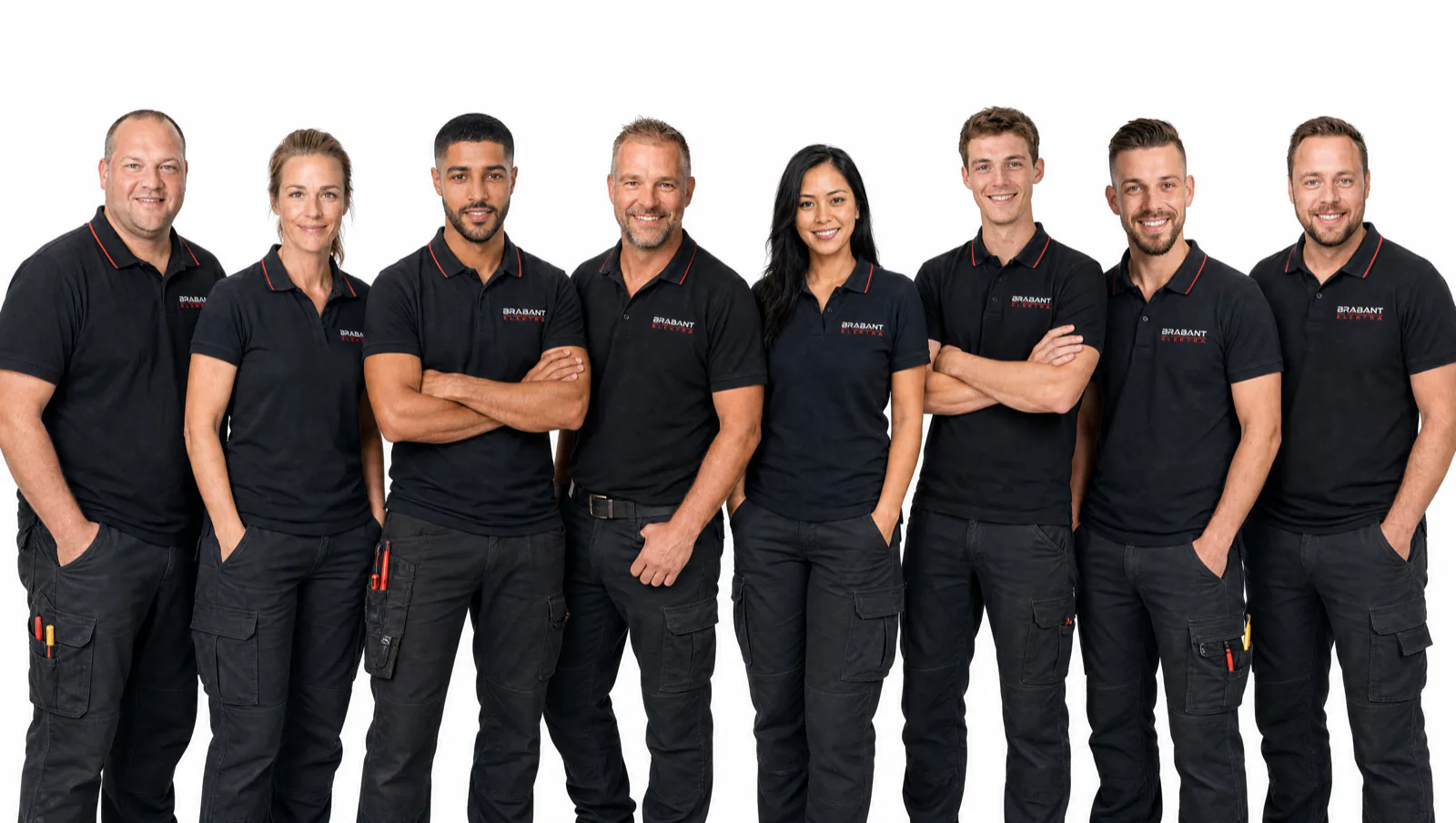
Our certified electricians work across all of Noord-Brabant to NEN 1010, with a fixed price upfront and a 2-year work guarantee. Certified, insured and straightforwardly professional.
Frequently asked questions
Good to know
Service area
An electrician near you
From Eindhoven to Breda and from Den Bosch to Tilburg: our certified electricians come to you, with a fixed price upfront.
Service area
Across Noord-Brabant
From major cities to smaller towns, active in:
Have an EV charger safely connected?
We do not work with an airy subsidy promise, but ensure a correct, safe connection to NEN 1010, including a check whether your fuse box can handle it, with a fixed price upfront. Want to know what is possible for you? Get in touch with us.