In brief
The short answer
Grid congestion means the electricity grid is full: more power is being demanded or fed back than the cables and substations can handle at peak moments. In Noord-Brabant this is strongly felt because of the energy transition, lots of solar and wind, and busy industrial estates. For households it mainly means longer waiting times for a heavier connection and sometimes restrictions on feeding back solar power. Consuming smartly yourself and a home battery become more important. Always check the current situation with your grid operator Enexis.
- Grid congestion means the electricity grid is full and cannot cope with everything at peak moments.
- Noord-Brabant is a busy region because of solar, wind and many industrial estates.
- Enexis is the grid operator and is working on expansion, but that takes time.
- For households: longer waiting times for a heavier connection.
- Self-consumption, smart charging and a home battery become increasingly valuable.
What exactly is grid congestion?
The electricity grid is like a road network. The cables in the street, the distribution substations and the heavier high-voltage connections together have a maximum capacity. As long as there is room, electricity flows simply from A to B. But just as on the motorway, congestion arises when everyone wants to go in the same direction at the same time. We call this grid congestion: at certain moments more electricity wants to flow through the grid than fits.
That pressure runs in two directions. On one side we are drawing more and more power, think of heat pumps, electric cars and homes going off gas. On the other side we are also feeding back more and more, mainly through solar panels that on a sunny day all push power onto the grid at the same time. Both directions load the same grid.
Important to know: grid congestion does not mean the power goes off. Your lights keep shining and your sockets keep working. The point is that the grid operator cannot always deliver or absorb more capacity when you apply for it. New or heavier connections can therefore take longer as a result.
Why Noord-Brabant in particular is so busy
Noord-Brabant is one of the regions where the pressure on the grid is felt most strongly. That has everything to do with the energy transition running here at a rapid pace. From De Peel to De Kempen and from Eindhoven to Breda, there are many solar panels on roofs and large solar farms and wind turbines have been added. On sunny, windy days they produce enormous amounts of power together that all has to go somewhere.
Brabant is also a province with a great deal of economic activity. The industrial estates around the larger cities are growing and upgrading their connections, data centres and industry demand extra capacity, and horticulture is also electrifying. All that demand comes on top of ordinary household consumption, which is only increasing through heat pumps and EV chargers.
The grid operator in virtually all of Noord-Brabant is Enexis. They are working hard on expanding and strengthening the grid: new substations, thicker cables and smarter management. But such expansions take years and many skilled workers, while demand is rising faster than the grid can keep up. As a result Brabant is running up against the limits of the current grid in some places.
What it means in practice for you as a household
For most households nothing changes in day-to-day use. You only notice grid congestion when you want something that requires extra capacity. The clearest example is a heavier connection: if you want to go from a single-phase to a three-phase connection, for example for a heat pump, a fast EV charger or a renovation, the lead time can be longer than you are used to. Where that was arranged quickly in the past, it can now take a while. Exactly how long varies by area and moment, so check the current status and waiting time with Enexis.
A second point is feeding back solar power. In places where the grid is full, an inverter can temporarily throttle back on sunny moments because the grid voltage runs too high. Your panels then feed back a little less for a while. In busy areas conditions are sometimes also placed on new or larger solar installations. It is sensible to look into this in advance if you want to install or expand panels.
The third and perhaps most important consequence is a shift in thinking. Where it was once logical to feed back as much power as possible, it is becoming increasingly valuable to use your own generated power yourself. That relieves the grid and, with the phasing out of net metering, is often also financially more favourable. Self-consumption and storage are becoming the new normal.
What you can do yourself
You have no influence over the grid, but you do have influence over your own approach. The first tip is: act early. If you are considering a heat pump, an EV charger or a heavier connection within the next few years, apply for it in good time. Because of the waiting times it pays not to wait until the last moment. A certified electrician can prepare your installation and set the application for upgrading with the grid operator in motion.
The second tip is to consume smartly. If you spread your heaviest users across the day as much as possible, you put less pressure on the peak. Charge your car at a quiet moment or when your solar panels are generating at full capacity, and avoid running a heat pump and washing machine all at full load at the same time. Smart charging and dynamic energy contracts help with that automatically.
The third step is storage. A home battery stores your own solar power so you use it in the evening instead of feeding it back onto a full grid. That increases your self-consumption, makes you less dependent on feed-in and fits well in a time when the grid is tight. Whether a battery pays off for you depends on your consumption, your panels and the current subsidy and net-metering rules. Get sound advice on that before you decide.
What to look out for
When grid congestion starts to affect you
For most people grid congestion only becomes relevant at a concrete step. These situations are the moment to think ahead and start in good time.
You want an EV charger or heat pump
Heavy users sometimes require a three-phase connection. Start applying in good time.
You want to upgrade your connection
A heavier connection can take longer than before. Check the waiting time with Enexis.
You are installing or expanding solar panels
In busy areas feed-in may be restricted. Check this in advance.
You want to get more out of your own power
Self-consumption and storage become more valuable now that feeding back pays less.
Read also
Read on and arrange it
Want to get started concretely? These pages help you take a further step, whether you want to upgrade your connection or are thinking about storage.
Requesting a three-phase connection
How to request a heavier connection.
More infoHome battery installation
Storing your own power becomes more important.
More infoEV charger installation
Smart charging within the limits of your connection.
More infoMeter box upgrade
Ready for heavier use, properly arranged.
More infoWhy Brabant Elektra
Prefer to have a professional take a look?
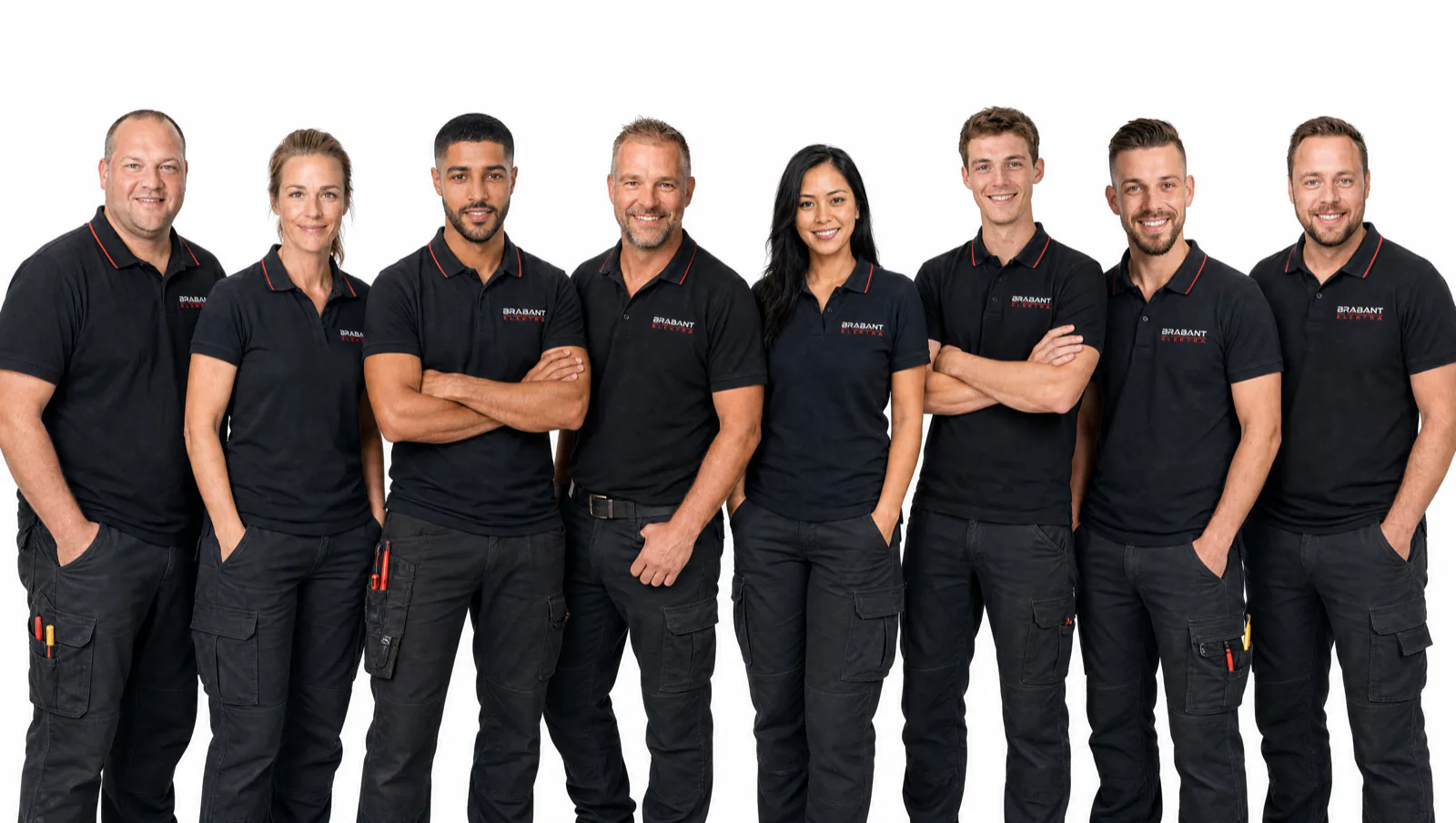
Our certified electricians work across all of Noord-Brabant to NEN 1010, with a fixed price upfront and a 2-year work guarantee. Certified, insured and straightforwardly professional.
Frequently asked questions
Good to know
Service area
An electrician near you
From Eindhoven to Breda and from Den Bosch to Tilburg: our certified electricians come to you, with a fixed price upfront.
Service area
Across Noord-Brabant
From major cities to smaller towns, active in:
Ready for heavier use? Sort your connection in good time
Are you considering a heat pump, EV charger or a renovation that needs more capacity? Then a heavier connection is often the first step. With the pressure on the grid it pays to be early. We prepare your installation and help you set the application with the grid operator in motion, so you do not wait any longer than necessary.